

14/04/2026 | Last Updated: 14/04/2026 | 12 min read
Xeriscape Water-Wise Gardens
Drought-smart landscaping for Australian climates.
Xeriscape gardens work with your climate instead of fighting it — choosing plants that thrive on natural rainfall, grouping them by water need, and designing the landscape to capture and conserve every drop. The result is a garden that looks lush and intentional year-round, even through the driest summer, while slashing your water bill and maintenance time.
See It in Context
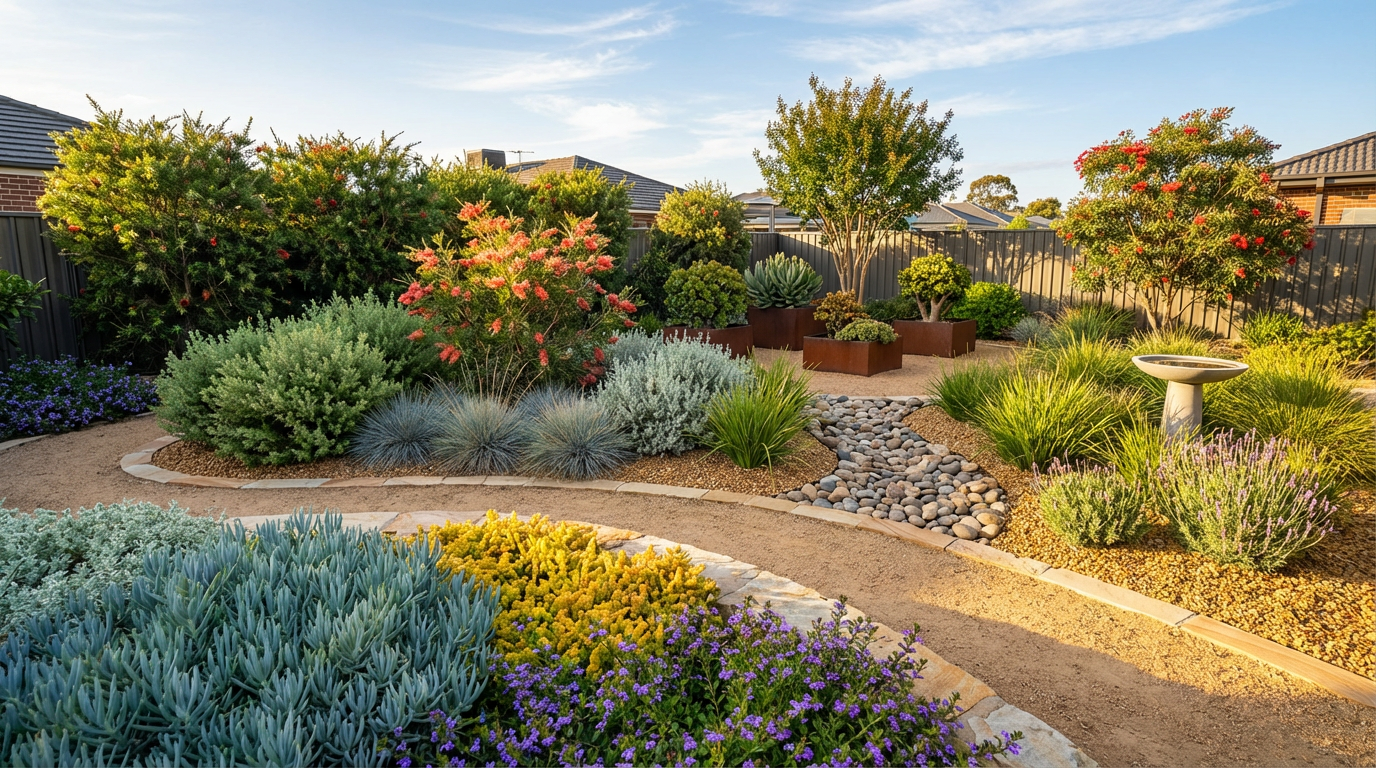
A water-wise garden doesn't mean barren or boring. Here's what a fully planted xeriscape garden looks like when the layers come together.
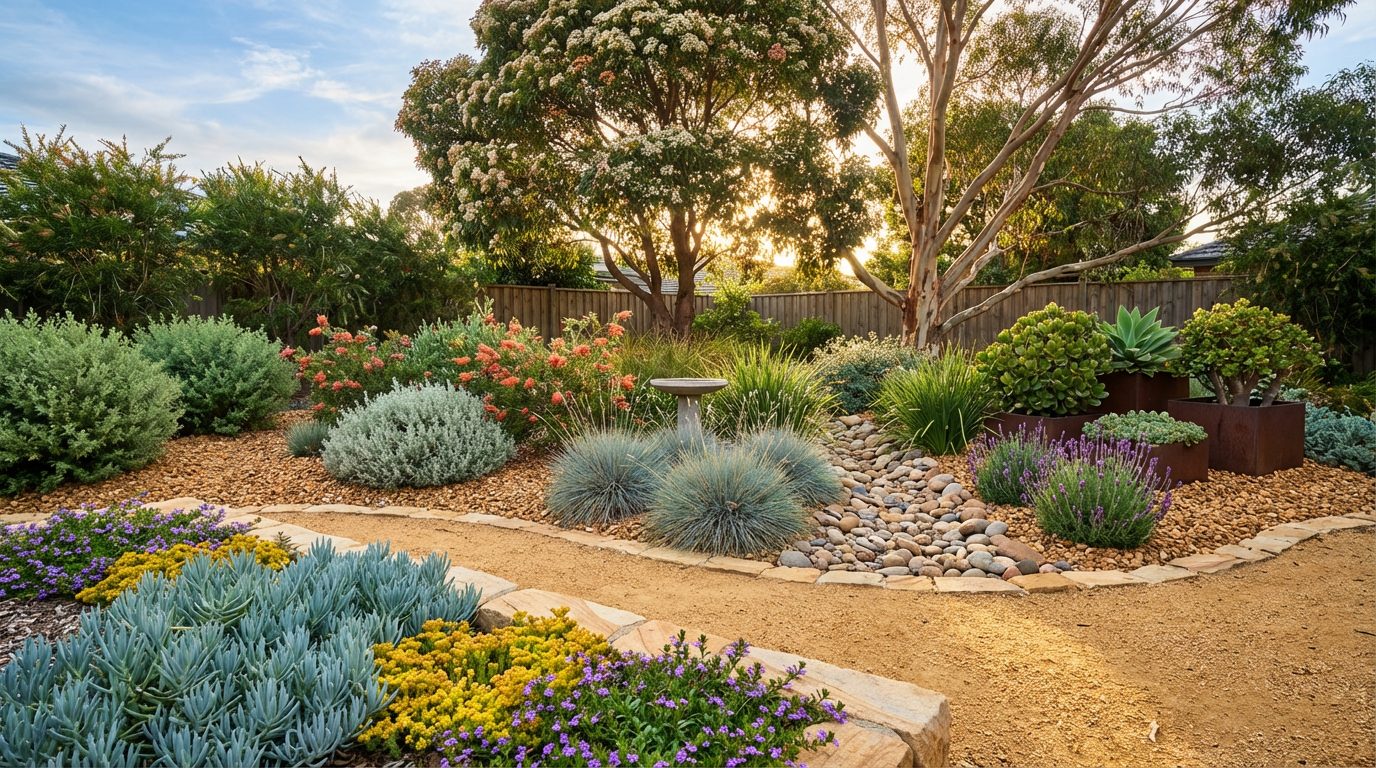
Native canopy tree, gravel mulch, blue-grey grasses, succulents, and warm flowering accents — five layers working together on minimal water.
Why Xeriscape? The Numbers Speak.
A well-designed xeriscape garden can reduce outdoor water use by 50–75% compared to a traditional lawn-and-garden layout. In most Australian cities, outdoor irrigation accounts for 30–50% of household water consumption — so the savings are real and substantial. Beyond your water bill, xeriscaping reduces runoff, supports local ecosystems, and creates a garden that actually improves during drought instead of dying.
Hydrozone Your Garden
Group plants by water need. Thirsty plants together, dry-lovers together — so no plant gets too much or too little water.
Right Plant, Right Place
Choose species naturally adapted to your soil, sun, and rainfall. Adapted plants establish faster and need far less ongoing care.
Soil & Mulch First
Improve soil to hold moisture at root depth. Mulch the surface to insulate, suppress weeds, and cut evaporation by up to 70%.
Build a Water-Wise Garden in 5 Layers
A successful xeriscape garden isn't random — it's built in layers, from canopy shade down to the ground plane. Each layer serves a water-saving function. Follow these five steps to choose the right plants for each role.
Sizing for Your Space
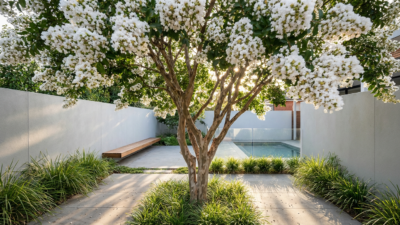
In small gardens (under 50m²), choose a single tree maturing at 4–6 metres — enough to shade a seating area without dominating the space. Larger gardens can handle specimens reaching 8–12 metres. Always check root spread as well as canopy width — some drought-adapted species develop aggressive surface roots that can lift paving and affect foundations.


💡 Water-Wise Tips
- Position your tree to shade the hottest face of the garden — usually north or west in southern Australia.
- Dappled shade beats dense shade in xeriscape — it lets rainfall through to the soil below.
- Deep-water weekly for the first two dry seasons to establish roots, then stop. Natives rarely need more.
- Deciduous options let winter sun warm the garden and reduce frost damage to tender plants beneath.
- Mulch to the drip line — the outer edge of the canopy — to insulate the entire root zone.
Sizing for Your Space
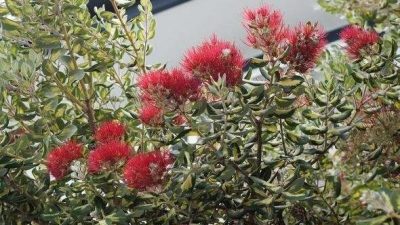
For effective wind reduction, your screen needs to be at least 1.5 metres tall. The sheltered zone extends roughly 5–8 times the screen's height downwind — so a 2-metre hedge protects plants up to 10–16 metres behind it. In narrow spaces, a single row of columnar or fastigiate plants provides effective screening without consuming precious garden area.
💡 Water-Wise Tips
- Place screens on the prevailing hot-wind side — usually north or west in southern Australia.
- A permeable screen (hedge) beats a solid wall — it diffuses wind instead of creating turbulence on the lee side.
- Evergreen species provide year-round wind protection with no seasonal gaps.
- Double-row staggered planting gives faster, denser coverage if you need wind protection urgently.
- Choose species that need no irrigation once established — the screen should save water, not consume it.
Sizing for Your Space
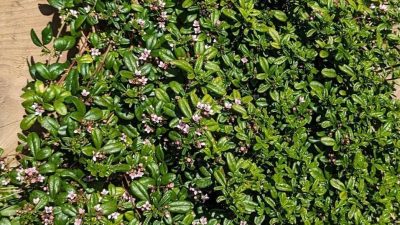
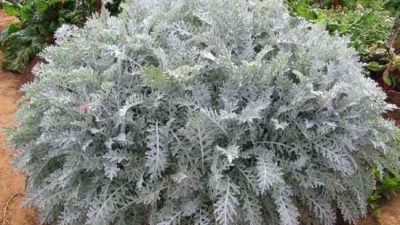
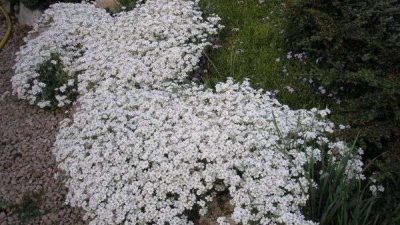
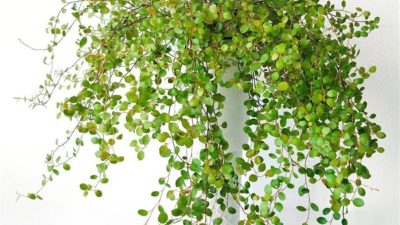
Space drought-tolerant ground covers at about 60–70% of their mature spread for full coverage within one to two growing seasons. Most low-water ground covers demand well-drained soil — they'll rot in waterlogged conditions. For large areas previously under lawn, convert in defined zones and expand progressively rather than attempting everything at once.
💡 Water-Wise Tips
- Replace lawn in low-traffic areas first — that's where ground covers deliver the biggest water savings.
- Mulch between new plants with chunky organic mulch or gravel until they knit together.
- Many drought-tolerant ground covers resent overwatering — let soil dry between waterings during establishment.
- Combine ground covers with decomposed granite or gravel paths for a classic xeriscape aesthetic.
- Choose spreading species for slopes — they control erosion and conserve moisture simultaneously.
Sizing for Your Space
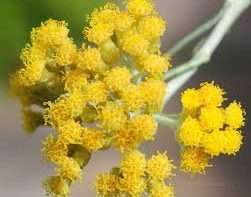
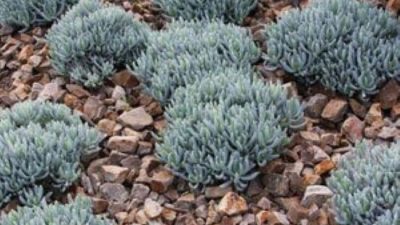
Succulents range from tiny 5cm rosettes to dramatic architectural specimens over a metre tall. Use larger succulents (Agave, Aloe, or chunky Crassula) as focal points, and mass smaller varieties as textural ground-level carpets. Silver-foliaged shrubs like Westringia, Leucophyta, and Convolvulus typically reach 60cm–1.5m and work beautifully as mid-layer fillers between ground covers and canopy trees.
💡 Water-Wise Tips
- Drainage is everything for succulents — raised beds or mounded soil with added coarse grit is ideal.
- Group succulents with other succulents, not with moisture-loving plants. Their water needs are completely different.
- Silver-leaved plants are typically coastal or Mediterranean natives — they handle heat, wind, and drought naturally.
- Avoid overhead irrigation for succulents — drip or no irrigation at all is best.
- In frost-prone areas, position tender succulents under eaves or against a north-facing wall for warmth.
Sizing for Your Space
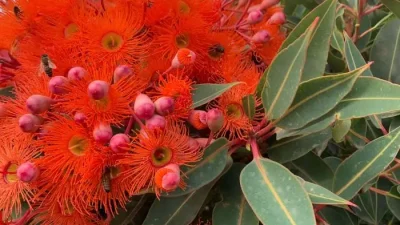
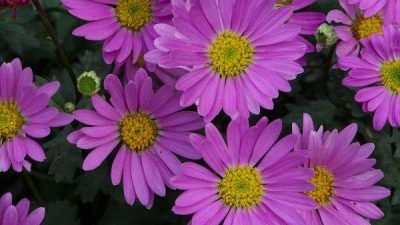
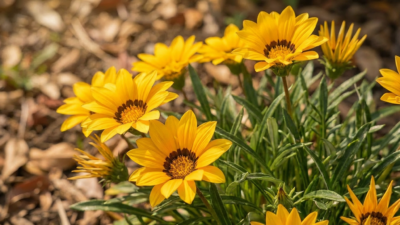
Place flowering accents where you'll notice them most — near entries, along paths, beside seating, or at the end of a sightline. You don't need colour everywhere. Three to five well-placed flowering plants set against a backdrop of greens, silvers, and gravel creates a far more sophisticated look than colour scattered across every bed. Let the drought-tolerant framework be the star — flowers are the punctuation.

💡 Water-Wise Tips
- Plant in autumn — roots establish through the cool season and plants are much tougher by their first summer.
- Native flowering species attract pollinators and often bloom far longer than exotic alternatives.
- Deadhead spent flowers to redirect energy into more blooms rather than seed production.
- A warm palette — yellows, oranges, reds — complements silver foliage and gravel tones beautifully.
- If a flowering plant needs regular watering to look good, it's the wrong plant for a xeriscape garden.
Ready to Go Water-Wise?
Tell us about your sun exposure, soil type, and local rainfall — we'll help you choose the perfect drought-tolerant plant palette.
0 Comments